
What is SEO?. Every day, millions of people use search engines like Google to find products, services, and information. If your website does not appear in search results, you may be missing valuable customers. SEO helps businesses improve their visibility, attract organic traffic, and build long-term credibility online. In this guide, we will explain what SEO is, how it works, and why it is essential for business growth.
What Is SEO?
SEO is the practice of improving a website’s visibility on search engines like Google so that more people can find your business online. The main objective of SEO is to increase organic (free) traffic to a website by making it more visible, relevant, and useful for users. Whether you run a small business or a large company, SEO helps attract potential customers who are actively searching for your products or services online.
How Does SEO Work?
Search engines like Google use bots, also known as crawlers, to discover and index web pages. These bots scan websites, analyze content, and store information in a massive database. When a user searches for something, Google evaluates thousands of pages and ranks them based on relevance, quality, authority, and user experience. SEO helps improve these factors, making it easier for search engines to understand and recommend your website.
Why Is SEO Important for Businesses?
SEO is important because it helps businesses reach potential customers at the exact moment they are searching for products or services online. Unlike paid advertising, SEO can generate long-term organic traffic without paying for every click. A well-optimized website can improve brand visibility, increase credibility, generate quality leads, and support business growth. Whether you are a local business or a global brand, SEO plays a crucial role in digital success.
Benefits of SEO
- Increases website traffic through organic search results.
- Improves brand visibility and online presence.
- Builds trust and credibility among potential customers.
- Generates high-quality leads from users actively searching for solutions.
- Provides long-term results compared to many paid advertising methods.
- Enhances user experience through better website structure and performance.
- Helps businesses reach customers who are actively searching for their products or services.
- Supports long-term business growth by generating consistent organic traffic.
Types of SEO
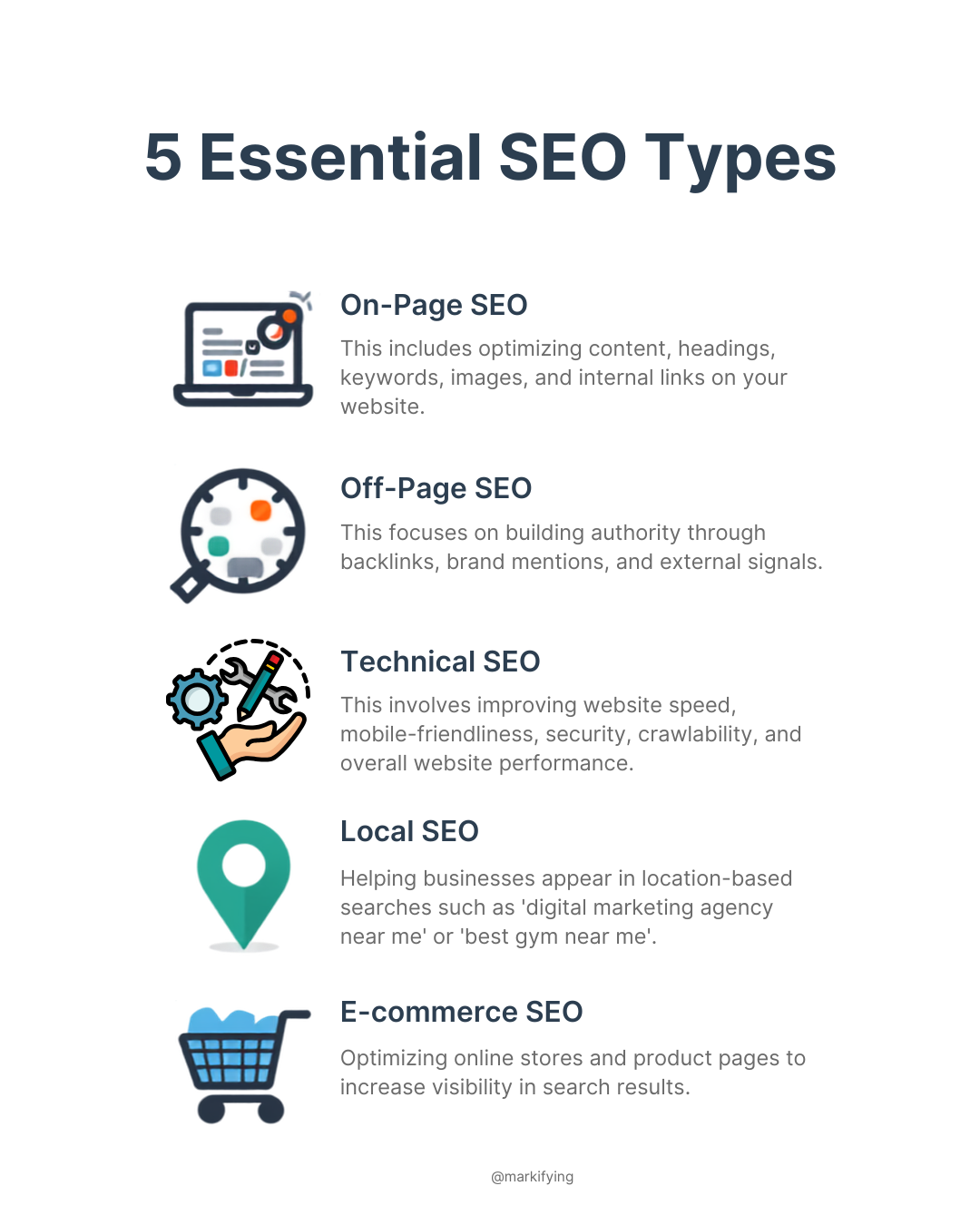
There are three main types of SEO:
1. On-Page SEO
This includes optimizing content, headings, keywords, images, and internal links on your website.
2. Off-Page SEO
This focuses on building authority through backlinks, brand mentions, and external signals.
3. Technical SEO
This involves improving website speed, mobile-friendliness, security, crawlability, and overall website performance.
4. Local SEO
Helping businesses appear in location-based searches such as “digital marketing agency near me” or “best gym near me.”
5. E-commerce SEO
Optimizing online stores and product pages to increase visibility in search results.
Common SEO Mistakes to Avoid
Many businesses make SEO mistakes that can negatively affect their website rankings. Some common SEO mistakes include:
- Keyword stuffing by using the same keyword excessively.
- Publishing low-quality or duplicate content.
- Ignoring mobile optimization and user experience.
- Having a slow-loading website.
- Not optimizing title tags and meta descriptions.
- Neglecting technical SEO issues such as broken links and indexing errors.
By avoiding these mistakes and following SEO best practices, businesses can improve their search engine rankings and achieve better long-term results.
Conclusion
SEO is an essential part of digital marketing that helps businesses improve their online visibility, attract relevant traffic, and achieve long-term growth. By implementing the right SEO strategies, businesses can connect with potential customers and build a stronger online presence. Whether you are a startup, local business, or established company, investing in SEO can provide lasting benefits and support your overall marketing goals.